

What Evidence Helps Military Sexual Trauma VA Claims?
The VA will not deny your MST-related claim simply because the assault was never officially reported. This is written directly in the regulation. They will look for corroboration, and knowing what qualifies for it can be the difference between approval and years of appeals.
The Governing Rule: 38 C.F.R. § 3.304(f)(5)
The regulation governing MST-related PTSD claims is 38 CFR 3.304(f)(5). It states that evidence from sources other than a veteran’s service record may corroborate a veteran’s account of a stressor incident.
This matters because most MST incidents go unreported in official service records. The VA explicitly recognizes that sexual trauma is often unreported – survivors often do not come forward due to fear, shame, concerns about retaliation, or institutional mistrust. The regulations account for this reality by broadening the definition of acceptable evidence.
Your Personal Statement Is a Real Piece of Evidence
Your lay statement – a detailed written account in your own words – can establish that an event occurred. It is especially useful when it includes specific dates, timeframes, locations, and the names of witnesses. The month and year are sufficient, but you do not need to remember the exact date.
This is filed using VA Form 21-0781, which, as of July 2024, replaced the older personal assault form. The prior personal assault form (21-0781a) has been discontinued.
Your statement carries real weight, but it should not stand alone. The VA evaluates evidence cumulatively, and a well-supported claim is significantly harder to deny.
Behavioral Markers: Evidence the VA Must Consider
The regulation notes that “evidence of behaviour changes following the alleged assault is one type of relevant evidence.” Examples include requests for transfer, deterioration in work performance and substance abuse. Other examples include episodes of depression or anxiety with no identifiable cause, and unexplained economic or social behaviour changes.
These are called “markers” and they are particularly significant in MST claims. If your employment record shows any of the following after an incident, your lawyer should be aware of them:
- A sudden request for a unit or duty change
- Declining performance evaluations or counseling from management
- Disciplinary actions without a history of previous misconduct
- A pattern of seeking medical or mental health treatment for no apparent reason
- Abrupt changes in financial behavior or social withdrawal, noted in any official records.
The VA evaluates marker evidence cumulatively. A claim supported by lay statements, service record changes, medical treatment records, and an expert opinion is substantially stronger than a claim based on a single piece of evidence.
Outside Records That Carry Significant Weight
Under 38 C.F.R. § 3.304(f)(5), examples of corroborating evidence include records from law enforcement authorities, rape crisis centers, mental health counseling centers, hospitals, or physicians; pregnancy tests or tests for sexually transmitted diseases; and statements from family members, roommates, fellow service members, or clergy.
If you sought any kind of counseling, treatment, or even informal support after an assault, those records exist. A call to a crisis line, a visit to a military chaplain, or a conversation with a doctor – any of these can be documented and submitted.
The Nexus Opinion: Why a Medical Professional’s Assessment Matters
Under 38 CFR 3.304(f)(5), a post-service medical opinion can serve as corroborating evidence that the stressor occurred. This is a significant advantage that MST claimants have over veterans filing other types of PTSD claims. For combat PTSD, a medical opinion generally cannot establish that a stressor happened on its own. However, for MST claims it can.
VA rates the diagnosed condition caused by MST – most often PTSD or another mental health disorder – using the General Rating Formula for Mental Disorders under 38 C.F.R. § 4.130. VA evaluates the frequency, severity, and duration of symptoms, not just the diagnosis. This means how PTSD affects your work, relationships, sleep, and daily functioning is directly related to your rating.
Buddy Statements from Fellow Service Members
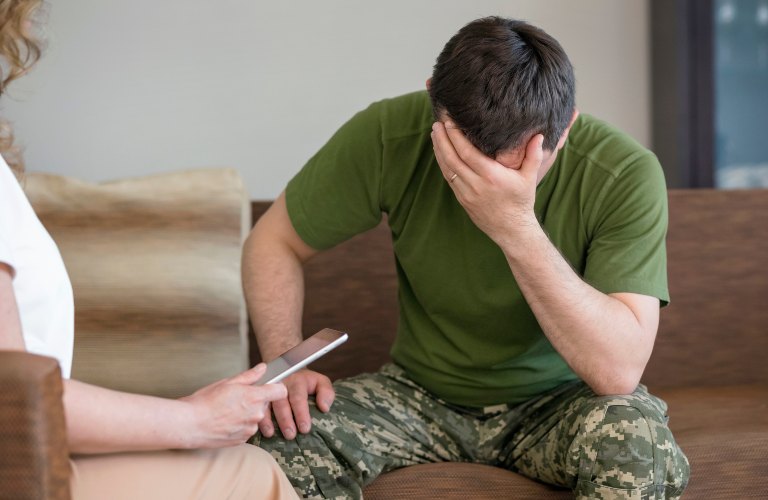
Buddy statements, Nexus letters, and markers of trauma – like behavioral changes or requests for transfer – can strengthen your MST PTSD claim when official documentation is limited. A fellow service member does not need to have witnessed the assault. Observations of changed behavior, withdrawal, or distress after the incident are legitimate and reviewable evidence.
Take the Next Step With Legal Support
MST claims are among the most emotionally difficult claims that veterans file, and they are also among the most frequently undervalued when veterans go through the process on their own. The evidentiary standard is more flexible than most people realize, but building a well-documented file requires preparation and experience.
At Veterans Benefits Law Group, PLLC, our attorneys understand what the VA is looking for and how to present your evidence in the most convincing way possible. If you are told there is not enough proof to support your claim, we encourage you to speak with our team before accepting that answer. Contact us today to schedule a free consultation and find out what your claim might actually be worth.
Share This Story
Interested in this topic? Your friends might be too! Consider sharing this story to your social media channels and look like a smart, sophisticated resource of information.